
While analysts remains overweight on financials, property, discretionary, industrials and materials, they maintain a neutral stance on pharma, telecom and energy; and underweight on staples, utilities, and IT services.

India is finally waking up to the fact that its credit drought might be here to stay.

Indian government bonds, particularly those of shorter maturity, strengthened sharply on Monday, as the collapse of the California-based Silicon Valley Bank (SVB) prompted investors to rush to the safety of American debt, leading to a decline in US bond yields.

Kotak Bank was the top gainer in the Sensex pack, rallying over 8 per cent, followed by TCS, Infosys, ICICI Bank, HCL Tech and ONGC. On the other hand, Titan, HUL, PowerGrid, NTPC and Nestle India were among the laggards. NSE Nifty advanced 126.60 points, or 1.38 per cent, to settle at 9,313.90.

The S&P BSE Small-cap index has recovered 26 per cent as compared to a 23 per cent rise in the S&P BSE Sensex.

In UK, France and Germany, the president and CEO of Edelweiss Securities, anticipates votes incrementally in favour of local protection and de-globalisation.

Most experts said indices would open higher on Monday and rally might sustain for a few sessions

Among key stocks, Tata Motors, Hero MotoCorp, L&T, Wipro, ICICI Bank, Dr Reddy's Labs and ICICI Bank, all up between 1%-3%

Many investors want to exit equities now and re-enter when they begin to rise. Such timing is difficult to pull off.

The net inflows into active equity mutual fund (MF) schemes registered more than a twofold month-on-month rise in August, crossing Rs 20,000 crore, the highest in five months. This rise in net inflows was boosted by an 18 per cent growth in gross investments, driven by a record Rs 15,800 crore inflow through the systematic investment plan (SIP) route and Rs 5,000 crore collected by seven new fund offers (NFOs) in the active equity space, reveals data released by the Association of Mutual Funds in India (Amfi). Moreover, redemptions moderated in August, declining by 19 per cent to Rs 24,580 crore, after staying elevated in the previous three months owing to profit booking.

Benchmark indices Sensex and Nifty gained around half a per cent to close at nearly five-month high levels on Monday following continuous foreign fund inflows and firm trends in Asian and European markets. Rising for a second straight day, the 30-share BSE Sensex climbed 317.81 points or 0.51 per cent to settle at 62,345.71, the highest closing level since December 14. During the day, it rallied 534.77 points or 0.86 per cent to 62,562.67.

Sensex rally was driven by Bajaj FinServ, Reliance Industries, Bajaj Finance, ICICI Bank, HDFC and Axis Bank. NSE Nifty climbed 326.50 points to end at 15,245.60.

Maruti was the top gainer in the Sensex pack, rallying nearly 4 per cent, followed by PowerGrid, ITC, NTPC, SBI, M&M, Kotak Bank and HDFC Bank. On the other hand, TCS was the top loser on the Sensex, shedding over 6 per cent.
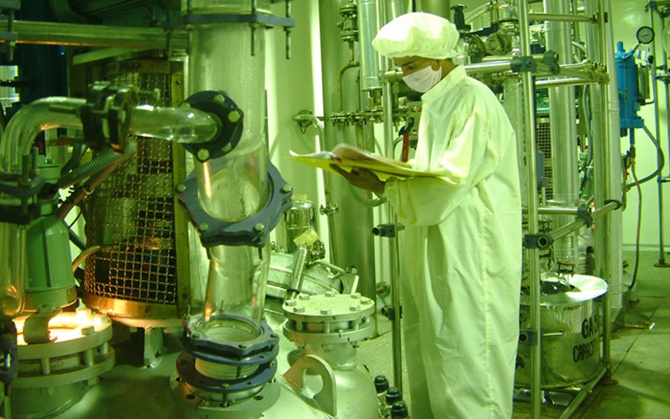
TCS is the most valued Indian company.

The best-case scenario is that the BJP will top out at around 50 seats in UP -- a drop of 12 from the 62 it had won in 2019. Taken in tandem with Maharashtra and Karnataka, this is what is likely to put paid to the BJP's ambitions of a third term for Modi, argues Prem Panicker.

BJP loss could trigger a correction

There is a lot of optimism across all markets and a large part of it is justified, says Samir Arora of Helios Capital Management.

The rupee on Thursday gained 39 paise to close at a nearly 10-month high of 59.29 against the US dollar following sustained selling of the American currency by exporters and continued capital inflows, ahead of keenly-waited Lok Sabha poll results to be unveiled on Friday.

The BSE Midcap ended up 0.5% while the Smallcap index ended nearly 1% higher

From the pandemic shocks to state polls to global trends, a raft of sentiment drivers are expected to steer the Indian stock market in 2022 after a historic year of massive investor returns and milestones. The Union Budget, which will be closely watched for further reform moves, and quarterly earnings of corporates will be among the developments on investors' radar amid global central banks moving towards tighter interest regime in the wake of inflationary pressures. The year 2021 was rewarding in a big way for equity investors.

Investor wealth zoomed over Rs 10.48 lakh crore in two days as the Budget-driven market euphoria continued to charge bulls on Tuesday.

Infosys was the top gainer in the Sensex pack, jumping over 4 per cent, followed by Tech Mahindra, Tata Steel, ICICI Bank, ITC, Maruti, SBI and Axis Bank. On the other hand, HCL Tech, M&M, Dr Reddy's, Asian Paints, Bajaj Auto and Bharti Airtel were among the laggards.

An average Indian spends no more than Rs 1.3 lakh per year, according to official statistics. This is close to what an average Indian earns annually. At this level of per capita income today, one litre of petrol costs one-third of an average Indian's daily income (Delhi prices), making it highly unaffordable. People in most other Asian and emerging countries find it more affordable.
TCS is the most valued Indian firm with a m-cap of Rs 502,764.54 crore

Fund mobilisation by companies through equity and debt routes has dropped 20 per cent in 2022 to nearly Rs 11 lakh crore, as exuberance dwindled this year due to expensive credit avenues and volatile markets. The first half of 2023 could continue to remain challenging. The year 2021 was extraordinary for fundraising from the equity and debt routes, while 2022 has seen a slowdown in capital raising owing to elevated volatility provoked by unprecedented inflation globally and the Russia-Ukraine war.

Gold, the safest haven amid the ongoing uncertainty, also emerged as one of the most lucrative investment options in financial year 2022-23 with an impressive return of 16.1 per cent in rupee terms, and 2.3 per cent returns in dollars. And, had it not been for the very high inflow of smuggled gold and the huge discount prevailing in the market due to high prices, the returns in gold would have been much higher, analysts said. The precious metal has consistently been delivering positive returns in India since 2016.

Analysts remain selective on cement stocks amid the likely government's capex push ahead of the scheduled general elections in May 2024. While UBS has initiated coverage on the Indian cement sector with an anti-consensus negative view and suggests investors sell select cement stocks on a rally, those at Nomura remain selectively bullish on the sector and prefer companies with large brownfield optionality and multi-region presence. In the near-term, UBS expects strong earnings of cement companies in the next two quarters to be driven by robust demand and margin tailwinds, but suggests any sharp uptick in stock prices could offer a good opportunity for booking profits in the related counters.

The companies having suffered large erosion in values included Tata Motors, TCS, Tata Steel, Tata Power and Titan Industries

Six decades and more later, we are now captives of our identities. Every poll is based on elaborate calculations of electability of candidates on the basis of their castes and other narrow definers. That, along with voter promiscuity, is what defines our political culture, which remains stubbornly resistant to any change, asserts Shreekant Sambrani.

Infosys was the top gainer in the Sensex pack, closing 7.20 per cent higher as investors cheered its financial results. The IT major posted better-than-expected 5.3 per cent rise in its June quarter net profit, and raised revenue growth forecast for the current fiscal.

The dollar is king in an intermediate correction, says Sonali Ranade

Two Adani group companies -- Adani Enterprises and Adani Transmission -- have uprooted the traditional leader Reliance Industries in annual wealth creation in 2022 so far, while the top 100 of them created a massive Rs 92.2 lakh crore of wealth, according to a report. However, Reliance Industries has smashed all records to emerge as the largest wealth creator during the five-year period ending March 2022, says the leading brokerage Motilal Oswal in its 27th annual wealth creation study. The Gautam Adani group companies have been rallying to dizzying heights in the year as the group snapped up many assets and diversified into newer areas.

Domestic mutual funds (MFs) and foreign portfolio investors (FPIs) have been net buyers of stocks in August. Domestic fund houses have continued to invest in stocks, propelled by the success of various new fund offers (NFOs) and strong flows into equity funds. MFs had purchased stocks worth more than Rs 8,300 crore until August 23, according to the data provided on the Securities and Exchange Board of India (Sebi) website. Jimmy Patel, MD and CEO at Quantum AMC, says: "The surge in equity investments by MFs is because of two key reasons. One, equity NFOs are getting a strong response from investors, and fund houses need to deploy that money in the markets.

On the Sensex chart, HDFC, L&T, SBI, Axis Bank, Bajaj FinServ and HDFC Bank were major laggards - dropping up to 2.62 per cent. NSE Nifty closed with a loss of 164.85 points at 15,080.75.

The market's sensitivity to the US Fed's balance sheet changes makes it vulnerable to the possible tapering of the bond buying programme and the resulting stagnation or even shrinkage in the balance sheet.

The value of the foreign portfolio investors' (FPI) holdings in the domestic equities reached $667 billion in three months ended September 2021, a surge of 13 per cent from the preceding quarter, according to a Morningstar report. This was largely on the back of strong performance by the Indian equity markets along with net inflows from FPIs at the later part of the quarter. "At the end of the quarter ended September 2021, the value of FPI investments in Indian equities shot up sharply to $667 billion, which was considerably higher than the $592 billion recorded in the previous quarter, a spike of around 13 per cent," the report noted.

Wadia Group-owned Go First Airways' (Go First) insolvency plea could trigger a 'momentum rally' in shares of rival airlines, Interglobe Aviation (parent company of IndiGo) and SpiceJet, as they look to gain bankrupt airline's market share, said analysts. On the bourses, shares of InterGlobe Aviation hit a 52-week high of Rs 2,235.95, surging 8 per cent on the BSE in Wednesday's intra-day trade, before settling 4.5 per cent higher at Rs 2,164 apiece. Those of SpiceJet and Jet Airways, meanwhile, rallied up to 6 per cent in the intra-day trade, and ended 1 per cent and 5 per cent higher, respectively, following the development, which was announced post market hours on Tuesday.

Technical rallies and short covering may arise only if the markets break this 500 point band

Market cap of government companies has remained unchanged in the past 8 years.
